Press Release from CSNTM

Press Release (8 Nov 2013):

Debut of Chester Beatty Papyri and New User Tools at CSNTM
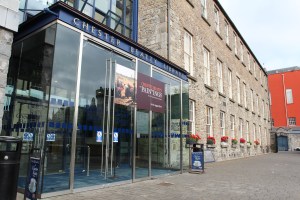
IMG_5770

The Center for the Study of New Testament Manuscripts (www.csntm.org) is well known for digitizing ancient biblical manuscripts. But the Center is not well known for having a user-friendly website. Because of a generous donation, the Center is giving a much-needed face-lift to its site. Phase I includes the following new features:

  • A basic search function now allows users to look at manuscripts by date, material, content, etc. You will notice a new search bar at the top of the manuscripts page. Simply enter in the data you’re looking for, and only those manuscripts that meet the criteria will be displayed.
  • Viewing technology has been added, allowing users to see thumbnail images instead of just a link. Simply click on the thumbnail and the high-resolution image is displayed in the viewer below. Users can now zoom in and examine manuscripts without having to open individual pages. This feature is currently available only for manuscripts digitized on the last five expeditions (Biblioteca Medicea Laurenziana in Florence; Gennadius Library in Athens; University of Athens Historical Museum; City Historical Library of Zagora, Greece; and the Chester Beatty Library in Dublin). More to come!
  • The website also provides links to the images of 29 (and growing!) significant manuscripts in various libraries throughout the world.
  • CSNTM currently has over 450 manuscripts listed in its manuscript page, with more than 1100 manuscripts in our archives. We are working on getting all 1100+ manuscripts listed on the site. As always, when the Center gets permission, the images of manuscripts become accessible to all.

The most exciting new additions to the CSNTM website are the Chester Beatty biblical manuscripts (which we digitized in the summer of 2013). These include all Old and New Testament Greek papyri, apocryphal texts, and all Greek New Testament manuscripts housed at the CBL in Dublin. Best of all, these can now be viewed on the manuscripts page. Using state-of-the-art digital equipment, the Center photographed each manuscript against white and black backgrounds. The result was stunning. The photographs reveal some text that has not been seen before.

CSNTM is grateful to the CBL for the privilege of digitizing these priceless treasures. The staff were extremely competent and a joy to work with. We are grateful to Dr. Fionnuala Croke, Director of CBL, for the opportunity to digitize their biblical texts. And we wish to thank Dr. Larry Hurtado, Edinburgh University, and the late Dr. Sean Freyne, Trinity College, Dublin, for recommending CSNTM for this important undertaking.

Daniel B. Wallace, Executive Director of CSNTM

Robert D. Marcello, Research Manager of CSNTM

Letters to A. T. Robertson

The great grammarian and professor at Southern Baptist Seminary for 34 years, A. T. Robertson, helped students as much as he could. A recent publication discusses some of the correspondence, including a postcard to Robertson by a 19-year-old college student named Bruce Metzger. Yesterday, Nov 6, was Robertson’s 150th birthday. Well worth the read! Go here to see the publication.


CHESTER BEATTY PAPYRI AT CSNTM!

Chester Beatty Library

Below you can find the press release from CSNTM regarding our most recent expedition.

17 September 2013

The Chester Beatty papyri, published in the 1930s and 1950s, are some of the oldest and most important biblical manuscripts known to exist. Housed at the Chester Beatty Library (CBL) in Dublin, they have attracted countless visitors every year. It is safe to say that the only Greek biblical manuscripts that might receive more visitors are Codex Sinaiticus and Codex Alexandrinus, both on display at the British Library.

The Center for the Study of New Testament Manuscripts (CSNTM) is pleased to announce that a six-person team, in a four-week expedition during July–August 2013, digitized all the Greek biblical papyri at the Chester Beatty Library. The CBL has granted permission to CSNTM to post the images on their website, which will happen before the end of the year.

The New Testament papyri at the CBL include the oldest manuscript of Paul’s letters (dated c. AD 200), the oldest manuscript of Mark’s Gospel and portions of the other Gospels and Acts (third century), and the oldest manuscript of Revelation (third century). One or two of the Old Testament papyri are as old as the second century AD.

Using state-of-the-art digital equipment, CSNTM photographed each manuscript against white and black backgrounds. The result was stunning. Each image is over 120 megabytes. The photographs reveal some text that has not been seen before.

Besides the papyri, CSNTM also digitized all of the Greek New Testament manuscripts at the CBL as well as several others, including some early apocryphal texts. The total number of images came to more than 5100.

CSNTM is grateful to the CBL for the privilege of digitizing these priceless treasures. Their staff were extremely competent and a joy to work with. Kudos to Dr. Fionnuala Croke, Director of CBL, for such a superb staff! This kind of collaboration is needed both for the preservation of biblical manuscripts and their accessibility by scholars.

IMG_6411 copy

Wax Drippings and Favorite Passages

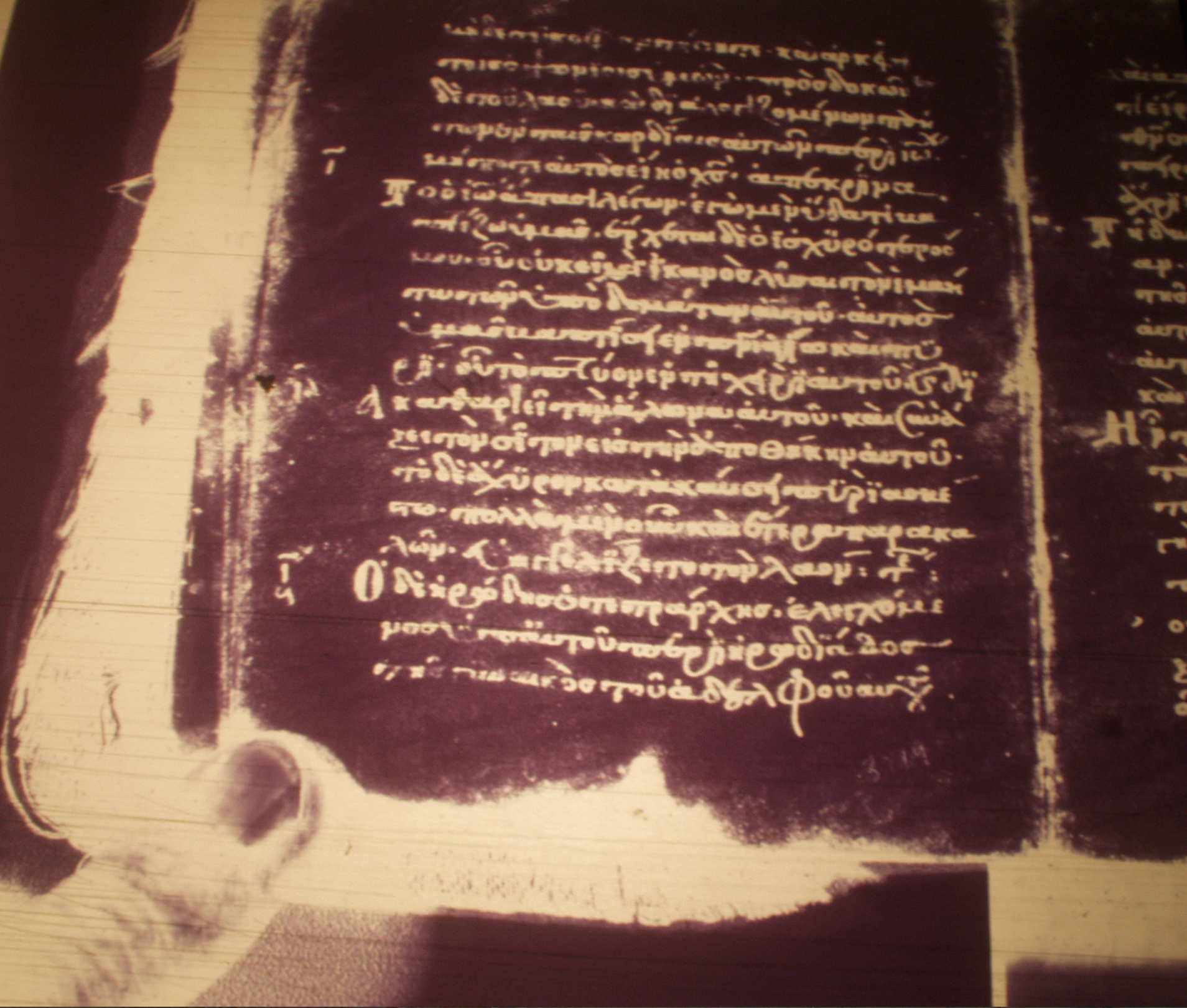
When the only access that students of the New Testament had to most images of manuscripts was through poor-quality microfilms, interpretation of the data was rather limited. The staff at the Institut für neutestamentliche Textforschung in Münster, which boasts about 90% of all NT MSS on microfilm, instructed student collators not to try to decipher the marginalia because such were virtually impossible to read. Just the text, please. And even with the text, the students had to guess at quite a bit of the letters and words because of blurred images. Below is an illustration of the kind of images they had to work with (this is codex 2813, photographed by INTF in 1989).

Screen Shot 2013-09-14 at 5.40.58 PM

Codex 2813 Microfilm Image

With digital photography, much more data can be seen and interpreted. This includes erasures, different colored ink (including the next-to-impossible-to-see-in-microfilm red and gold), smaller font, ornamentation, prickings (which are used to locate a MS’s scriptorium and age), etc. In addition, wax drippings are visible.

As innocuous as the wax drippings might seem, Henry Sanders, the editor of the editio princeps of Codex Washingtonianus, used them to show what pages were frequently on display. The reason, he argued, is that visitors would often read the pages with a candle, and less-than-careful lectors would inadvertently allow wax to drip from it onto the page.

Sanders’s comment, based on an examination of the actual MS, may have implications that go beyond codex W. With some caveats, it seems that wax drippings can be used to show what passages were favorites. If one were to examine the wax drippings seen in digital images of, say, a twelfth-century minuscule, he or she might be able to determine which passages were favorites from the twelfth century on. Of course, this kind of work would be needed to be done for a good number of manuscripts because an individual MS might be rather idiosyncratic—much the way codex W seemed to be (in that the wax drippings there, according to Sanders, only showed what passages were put on display, not what passages were otherwise favorites of readers). Lectionaries would probably be the least significant for interpreting wax drippings since they were regularly used in church services and the lector would of necessity be reading through the entire lectionary cycle, year after year. And when wax candles were used as opposed to oil lamps to read these MSS needs to be factored in as well. But MSS that were meant for study, personal use, or were otherwise not used much in public worship could contain many secrets of bygone generations of Christians.

I will offer two illustrations, one hypothetical and the other actual. John 3.16 is a favorite verse of American evangelicals today. It has even shown up on placards held by a crazed football fan wearing a multi-color afro, who would stand up in the end zone after a team scored, making sure that the TV cameras would capture the image.

 John 3.16 & multi-color doThe Gospel on the Simpsons

But was this text that well known and that well loved in ancient and medieval times? A look at digital images of MSS might reveal the answer. Of course, in order to make one’s case, a look at the entire MS’s images would be needed to see which pages had the most wax drippings. Another caveat: if the text on a given page was reworked, scraped, or had extensive marginalia, that might be the reason for extra wax drippings, produced in this case by the scribe him/herself.

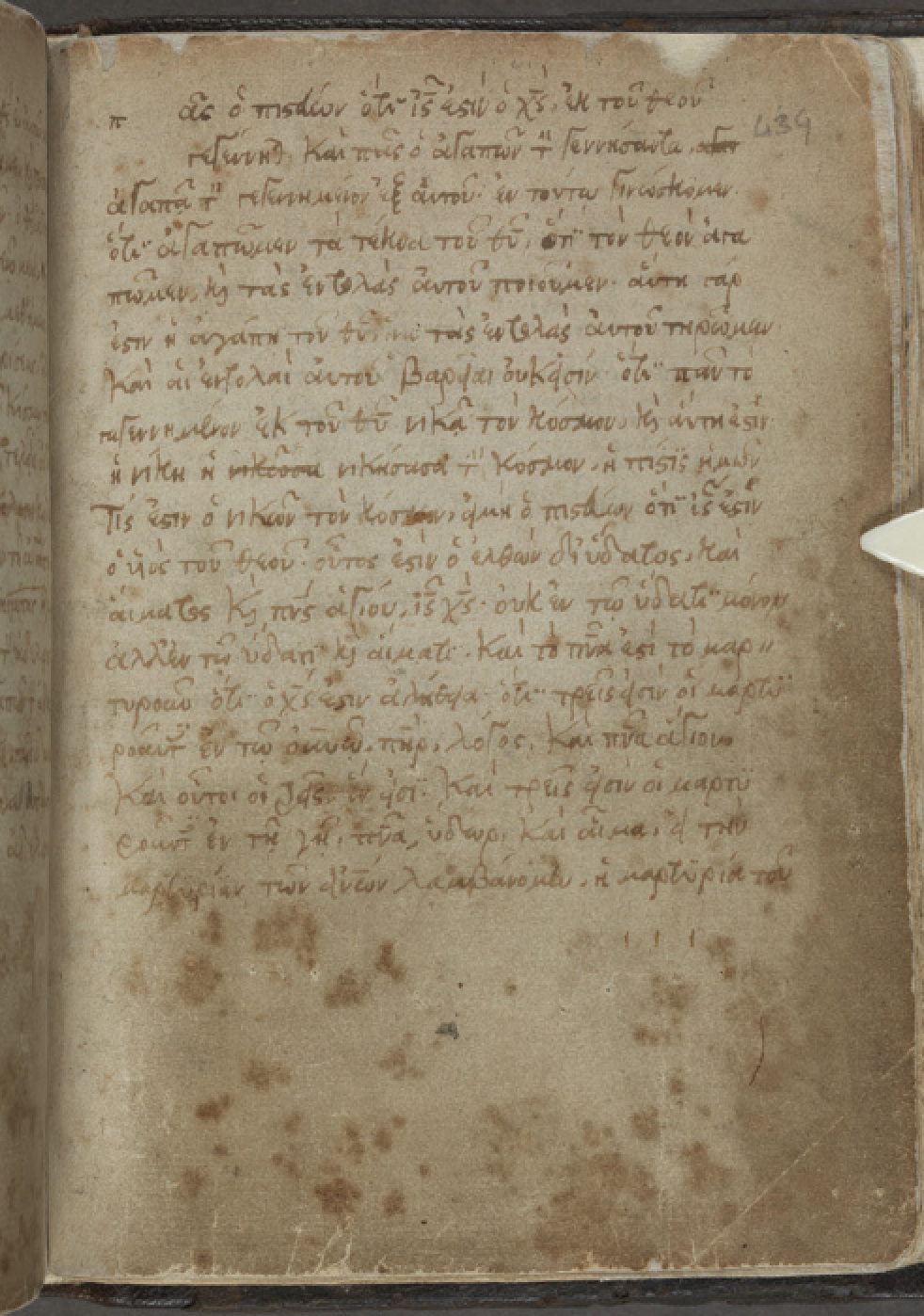
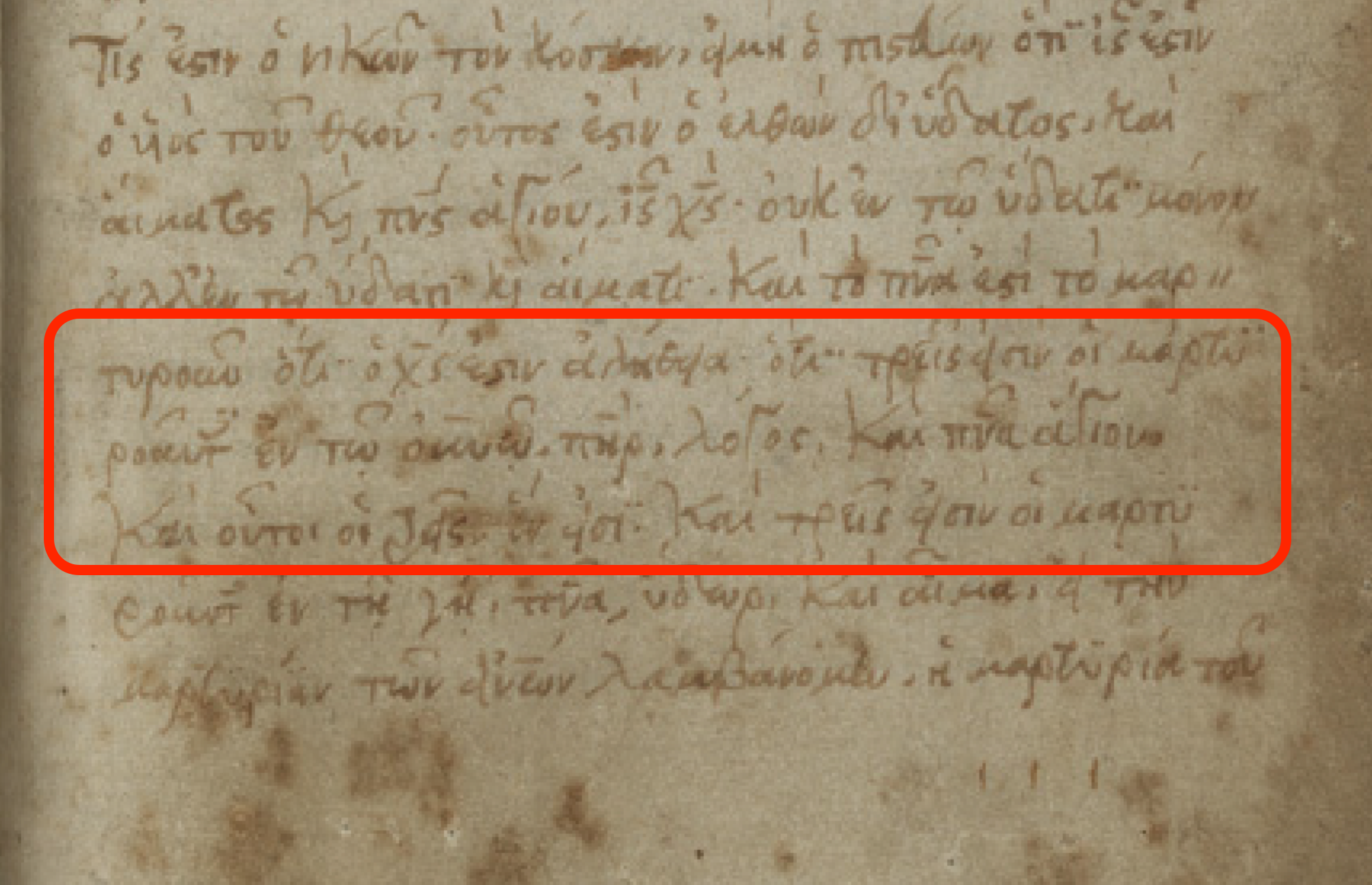
An actual illustration can be seen in codex 61, also known as Codex Montfortianus. This is the MS that was produced by a scribe in Oxford named (F)roy in 1520, which included the comma Johanneum (the Trinitarian formula at 1 John 5.7) that made its way into Erasmus’s third edition of the NT (1522). Now housed at Trinity College, Dublin, it is reported to have almost naturally fallen open to 1 John 5 because of the frequent consulting of this passage by researchers over the years. The MS nowadays is no longer available for direct consultation, but the library has produced some adequate digital images of it. And the page which contains the comma has more wax drippings by far than any other. It is also significantly dirtier than any other page, due to the constant handling of the page.

Screen Shot 2013-09-14 at 5.16.19 PM Codex 61: Two Pages before 1 John 5

 Screen Shot 2013-09-14 at 5.16.03 PMCodex 61 at 1 John 5

Screen Shot 2013-09-14 at 5.20.06 PM The Comma Johanneum in Codex 61

In the least, examining the wax drippings of digital images in continuous text MSS century by century and production-location by production-location (when known) could produce some interesting results. As these begin to be examined, certain guidelines should emerge on how to interpret the data. The necessary caveats may temper otherwise robust claims, but these should not keep students from examining the data.