Five Major Issues facing the Christian Faith Today: the Hugh Hewitt Show

I was in southern California today (14 February 2014), interviewed by Hugh Hewitt about five major issues facing the Christian faith. The show aired on over 120 stations. Hewitt is known as a conservative political pundit (and a law professor, among other things), and occasionally dips into religious issues. One can hear the interview by clicking on the audio link below.  The issues we discussed were (1) How do we know that the Bible we have in our hands today is what the apostles in the first century and the prophets before them actually wrote? (2) Is God good? The new atheism has changed their attack point from the veracity of the Christian faith to the ethics of the Christian God. (3) Did the ancient church muzzle the canon? Did Constantine really dictate what books would go in the New Testament? (4) What does the Bible teach about homosexuality and is it even a viable position? (5) Don’t the discrepancies in the Bible show that it is just a human book and not from God at all?

For responses to these questions, you’ll just have to listen to the show!

Seeking Allah, Finding Jesus

Seeking AllahMy good friend, Nabeel Qureshi, has just gotten his first book published: Seeking Allah, Finding Jesus: A Devout Muslim Encounters Christianity. It was co-authored with Lee Strobel and was released on 11 February 2014.

I have known Nabeel for a few years. When I first met him he was a relatively new Christian. He was also a medical doctor. He was then working on his first master’s degree; he recently completed his second master’s and will soon be working on a PhD. He’s in his early 30s.

Nabeel is one of those people who combine native genius with genuine passion. He’s been like this his whole life. When he was five years old he had read through the whole Qur’an, and had memorized the last seven chapters. He grew up a devout Muslim in America. After he was challenged regarding Christ by a college roommate, he had visions of the Lord that rattled him. Yes, visions. I have become convinced that God uses visions to bring especially Muslims to faith today. Call me a cessationist if you will, but a soft cessationist. Nabeel’s testimony has especially sensitized me to how God is acting in the world today. Here’s what Nabeel said about the book:

“I wrote Seeking Allah Finding Jesus for three reasons:
1) to equip Westerners to understand Islam and love Muslims, 2) to present to Muslims the gospel intelligibly and compellingly, 3) to provide insight on the ways God is calling Muslims to Christ despite the great cost, through relational witnessing and supernatural means like dreams and visions.”

On Amazon right now—one day after the book was released—there are already nine reviews, all five-pointers. Here are snippets from two of them:

“I knew I was in trouble when I had only listened a few seconds. The dedication at the beginning of the book, read by the author himself, had me bawling like a baby. It is dedicated to his parents, who are still in the Muslim faith. It is so honoring and beautiful, you can’t help but cry.”

“Two key points I found very convicting: as a Muslim, Nabeel was never invited into a Christian home AND, until meeting David Wood, he never encountered a Christian who knew his/her Bible or theology well enough to defend it. As a Muslim, Nabeel prided himself on being able to take on any Christian on any biblical topic and eviscerate their feeble arguments, which is sad to think about, since apologetics gives us so many concrete, historically based reasons to believe. We’re not befriending our neighbors and we’re not educating ourselves or our children. We’re not obeying II Timothy 4:2 by being ready in season and out to share our faith with those who so desperately need to hear the Truth. This book is helpful on so many levels. I highly recommend it to anyone who is serious about obeying the Great Commission.”

Any Christ-follower who is acquainted with at least one Muslim, and any Muslim who truly wants to pursue truth at all costs, should get this book.

I would like to add one request to my believing friends: Please pray for Nabeel’s family. He loves them so much, yet they are mired in Islam. Pray that they, too, will read this book and meet the One who redeemed Nabeel.

First Time to India

14 Jan 2014

I was asked by the Asia Christian Academy’s Evangelical Theological Seminary to teach some doctoral students on textual criticism for a week in January 2014. I jumped at the opportunity—in part because this would be my first trip to India, and in part because I was pretty sure these students had not had much instruction in textual criticism. Since there are no known Greek NT manuscripts in India, I had not gone before. (I did urge the students I taught to be on the lookout for them though!)

I flew out of Dallas on Friday, 3 January. The first plane was a Boeing 777. Very nice plane, going all the way to Frankfurt. Then, the real treat happened: I flew on a new 787 to Doha, Qatar. First time on one of those. Spacious, beautiful, functional. I was put in business class, which was a very rare luxury for me. There is no first class on the 787—just business and coach. I cannot imagine what first class would have been like; business class is that good. Fully reclining seats, wood-paneled storage compartments (several of them), 19” TV with zillions of movies to choose from (didn’t watch any), gourmet meals (and Rothschild cabernet and Brut champagne, among many others), plenty of privacy (you can put up a wall between yourself and the person ‘next’ to you [actually, about three feet away, already with a divider half way up]). Pampering by the attendants (with close to a 1:2 ratio, staff to customers!). Unbelievable. When we arrived in Doha, the captain apologized for the delay. We were all of five minutes late. The earlier flight, from Dallas to Frankfurt (not Qatar Airlines), took off two hours late. I had to hoof it through the Frankfurt airport to get to my connection.

When I arrived in Doha, I got to go directly to the brand new business lounge. Superb food everywhere, and free. At least, so it looked. Didn’t have time to linger. A state-of-the-art video game room. Showers. Expansive area for seating, with a view of the night sky and silhouette of the impressive, sky-scraped downtown. I had heard that Doha Airport was poorly planned, with few chairs and somewhat inhospitable. That was not my experience at all. But I had little time to enjoy it, and had to get to the gate almost immediately.

The flight from Doha to Bangalore was also on a 787. Both planes were Boeing 787-8 Dreamliners. Short flight this time, only 3.5 hours. Curiously, a few minutes before we landed, the flight attendants walked down the aisles with canisters that they sprayed high in the air. Another flight attendant was sitting up front in her jump seat, coughing up a lung. It smelled like the bug bombs that you set off in your house when the cockroaches have taken over your kitchen. The girls walked down the aisles, smiling the whole way, as if they were Vanna White hawking some goods. Surreal. My flight attendant said that the Indian government required the passengers to be subjected to a pesticide spray. (Got the same treatment when I left Bangalore on January 11.) Again, the pilot apologized for the delay: four minutes late this time.

When we touched down in Bangalore International Airport, I had now visited my 35th country. And I underwent another new-to-me experience at the airport: All of us leaving the airport, after going through customs, also went through a metal detector en route to collect our baggage. It seemed strange to have metal detectors for exiting passengers. And the security personnel also took it as a joke: the alarm went off on virtually everyone (including me), yet only a handful of people were checked (not including me).

I arrived at the airport at 4 AM. A driver picked me up and drove me to the president’s home where I would be staying for the week. As it turned out, I never saw any of India in the daylight except for the campus. I guess I need to go back to see the country someday!

The school is located just outside Bangalore, near the southern tip of India. Bangalore is one of the largest cities in the world. Sitting on 50 acres are a school (K–12) and a seminary (offering both master’s and doctoral degrees). The facilities are almost self-sufficient: they have a variety of crops growing at the compound, they collect rain water and purify it for drinking as well as having four deep wells, and they even use cow dung to create methane gas which they cook with! There is a small hospital, pharmacy, and general store on the campus, too. Quite an operation. The cost for an education is remarkably inexpensive: $800 per year, which includes tuition, room, and board. And the education the students receive is very good. Compare that to a decent degree in the States: $800 will cover two units, or roughly one-seventh of the tuition costs for a semester, with no room and board in the mix. Of course, the per capita income in India is just over $2000 a year. I found out that some students were coming from quite a distance, and it could take up to three weeks to get here. They would have to pay up to four months’ salary to be here for the week. Two students didn’t make it till the last day. We in the West often have no idea how fortunate we are!

I slept nine hours Saturday night and was refreshed. Monday morning, while I was eating breakfast with the president (Dr. Joy George, a Dallas Seminary alumnus) and his guests, I was told that I needed to get ready for chapel since I would be the chapel speaker today. This was news to me. (I found out later that this is the Indian way: outsiders are often called upon to speak at the drop of a hat.) So, I prepared the message mentally while taking my shower.

My ten 75-minute doctoral-level lectures ended up averaging almost two hours each. The Q&A took up a lot of time, but in light of the extreme sacrifices these students made to be there I couldn’t very well quit early on them. I was determined to say yes to all extra speaking engagements requested of me, as well as not miss any class unless I was on my deathbed.

Every noon meal we would eat in the cafeteria. I must confess: I am not a fan of Indian food. Not by a long shot. But eating it in India, in this place, was different. I actually found it to my liking. Two of the school’s main ingredients in their curry were ginger and garlic, not to mention the ubiquitous chili pepper. Indians do not get stomach cancer. The food is so hot that it kills off any bugs that dare call your tummy home. I suspect ulcers are another story.

Taking showers required some planning. I was in a nice-sized guest room with its own air conditioner. The remote did not have fresh batteries, which meant that the AC was either on at one temperature or off—whenever I remembered to turn it off. I would wake up at around 7, and fire up the water heater above the shower head. Go back to bed for 30 minutes, then go into the bathroom and shave with cold water (only one faucet, cold water only). While I was shaving I would turn the hot water for the shower on full blast, which meant that it drizzled out (perhaps that’s an exaggeration). Zero pressure, impossible to take a shower this way. The water would fill up half of a plastic bucket. Then, I would scoop up water as needed and pour it on my body parts, soap, rinse, repeat. The routine was not bad at all, but it wasn’t the Ritz.

One of the things I have a major phobia about is snakes. India has cobras, which can do some serious damage. And they have King Cobras, which can kill an elephant. The campus had not seen a King Cobra for awhile; I took a measure of comfort in that. I was told to bring a flashlight for walking around the campus at night, since that’s when the snakes would come out. Mine was powerful with new batteries. I didn’t want to take any chances. On Thursday night, a King Cobra had climbed up the outside wall of one of the homes and was trying to get into a child’s bedroom! When I learned about that, I decided not to sleep again till I would board the plane on Saturday morning.

Thursday night I enjoyed dinner with a former student of mine, Dr. Andrew Spurgeon. After dinner, a neighbor brought over some King Chili (a.k.a. Ghost Pepper) for me to sample. King Chili is known as one of the hottest spices in the world. The Nagaland tribes had used it to clean the heads after such were removed from unwilling bodies. Thus, it had the dual purpose of being a “condiment and an industrial solvent” (The Smithsonian Magazine). The main ingredient of the King Chili is Capsaicin; one of its uses is in a grenade to be tossed by the police at rioters. This worked well in Kashmir. Peppers are measured by Scoville Heat Units, or SHU. A jalapeño registers 4000 SHU. This means that it takes 4000 parts water to one part jalapeño juice before it can’t be tasted. The Bhut Jolokia (or King Chili) registers between 500,000 and 1.5 million SHU, or 125 to 375 times hotter than a jalapeño! The pepper was a sauce with bites of beef in it (I think the beef was from the cow that had been slain that morning). I was instructed to put a little bit of beef on a bed of rice. I could also add the sauce directly, but that would be way too hot. So, in my great wisdom, I poured some sauce on the rice as well and took a good-sized bite of sauce-dripped rice. I liked it! I ate the plateful then got seconds. My host told me that this batch was especially hot—the hottest that his neighbor had ever cooked up. I’m thinking of making a T-shirt that says, “I ate King Chili in India and survived…” and on the back “…barely!”

On Friday after I spoke in chapel, the school had a ground-breaking ceremony for the new library—a 30,000 foot three-story building. I had the great honor, along with David Fletcher (the man who invited me to speak at the school), of shoveling the first spade of dirt. First time for me to be involved in a ground-breaking ceremony. And, of course, I was asked to give a little speech afterward.

When I saw the library, though, my heart sank. Many textbooks were worn out, probably because too many students couldn’t afford to buy them and thus they relied on the library’s copies instead. I was amazed at the intelligent questions the students asked during my lectures in light of this impoverished Bibliothek. I have committed to giving the library several books. I know they will be put to good use. I figured that to be a small part of the evangelization of India is simply good stewardship. If you are interested in doing the same, please let me know.

Friday night I spoke in the auditorium before a public audience of about 400 people. This was the only lecture I gave in which the power did not go out. The school has a back-up generator for such occasions, and they need to use it several times every day.

The doctoral students gave me two gifts on Friday—first, an ornate wooden baton-like column called the Ashoka Column. It’s a replica of the emblem of India, with four lions on top of the column and other sundry animals and designs below. Second, a gold watch! The real deal from an Indian watchmaker, Titan. I could hardly believe that these students, who are in deep poverty, pooled their meager resources to get me these gifts.

The most important—and most treasured—comment I received from faculty and students was that more than learning about textual criticism, they learned to fall more deeply in love with their Lord. I was hoping that this is what they would get out of my week with them! All in all, my first trip to India was a thought-provoking, even life-changing, adventure. I don’t expect it to be my last.

Reading through the Greek New Testament

Students of the Greek New Testament are often at a loss on how to begin reading the text. After a year of Koine Greek, they may decide to tackle Hebrews, and promptly get discouraged at the prospect of ever being able to read the NT in the original tongue. This Reading List is designed to help students coming out of first-year Greek especially, but may be useful for more advanced students as well.

This list is organized along two lines: (1) easiest to most difficult, and (2) approximately ten chapter segments which bear some semblance of unity (e.g., either literary [pastorals] or historical [James-Galatians]). These two principles are sometimes in conflict.

The best way to read through the NT so as to increase your reading proficiency is to translate each chapter three times. As a rule of thumb, you should translate no less than one whole chapter and no more than about ten chapters at a time (the longer chapters in the Gospels may require breaking them up into more manageable sizes). Every time you translate, employ the “revolving door” principle. That is, rotate some chapters in and rotate some out. Thus, for example, if you try to translate through the NT in one year, you could translate one new chapter a day, but a total of three chapters a day. (See end of this list for how to get through the NT in one month!)

For example: Day 1: Matthew 1. Day 2: Matthew 1–2. Day 3: Matt 1–3. Day 4: Matt 2–4. Day 5: Matt 3–5, etc. Each chapter would get translated three times in the year and two would be near-immediate reinforcements.

One approach to mark your progress is to do this: underline a chapter the first time you go through it, circle it then second time, and cross it out (‘X’) when you’ve translated it three times.

1.            JOHN                    1    2    3    4    5    6    7    8    9   10  11 [Group 1]

12  13  14  15  16  17  18  19  20  21 [Group 2]

2.            1 JOHN                  1    2    3    4    5

3.            2 JOHN                  1

4.            3 JOHN                  1

5.            PHILEMON            1 [Group 3]

6.            REVELATION         1    2     3    4    5    6    7    8    9    10   11 [Group 4]

 12  13  14  15  16  17  18  19   20   21  22 [Group 5]

7.            1 THESS                 1    2    3    4    5

8.            2 THESS                 1    2    3 [Group 6]

9.            PHILIPPIANS           1    2    3    4

10.            MARK                    1    2    3    4    5    6 [Group 7]

  7    8    9   10  11  12   13   14   15   16 [Group 8]

11.            MATTHEW             1     2     3     4     5     6     7     8     9     10 [Group 9]

  11   12   13   14   15   16   17   18   19   20  [Group 10]

   21   22   23   24   25   26   27   28 [Group 11]

12.            ROMANS                1    2    3    4    5    6    7    8 [Group 12]

   9   10  11  12  13  14   15  16 [Group 13]

13.            EPHESIANS            1    2    3    4    5    6

14.            COLOSSIANS         1    2    3    4 [Group 14]

15.            GALATIANS            1    2    3    4    5    6

16.            JAMES                    1    2    3    4    5 [Group 15]

17.            1 COR                     1    2     3     4     5     6    7   8    9    10 [Group 16]

   11  12  13   14   15   16

18.            2 COR                      1    2    3    4 [Group 17]

     5    6    7    8    9    10   11   12   13 [Group 18]

19.            1 TIMOTHY              1    2    3    4    5    6

20.            2 TIMOTHY              1    2    3    4

21.            TITUS                       1    2    3 [Group 19]

22.            1 PETER                   1    2    3    4    5

23.            2 PETER                   1    2    3

24.            JUDE                        1 [Group 20]

25.            LUKE                        1     2     3     4     5     6    7     8 [Group 21]

     9    10   11   12   13   14   15   16 [Group 22]

     17  18   19   20   21   22   23   24 [Group 23]

26.            ACTS                        1     2     3     4     5     6     7     8     9    10 [Group 24]

     11   12   13   14   15   16   17   18   19 [Group 25]

     20   21   22   23   24   25   26   27   28 [Group 26]

27.            HEBREWS                1    2     3     4     5     6     7 [Group 27]

      8    9    10   11   12   13 [Group 28]

N.B. The reading assignments are broken up into twenty-eight segments of approximately ten chapters each (some as short as 6–8 chapters, one as long as 13). If one were to translate one group of chapters a day, he/she could get through the entire NT in one month. (This of course is not for the faint-hearted; doctoral students getting ready for comps may wish to do this though.) For the rest of us mortals, translating one new chapter a day, with two review chapters, will take 260 days to translate the whole NT. Taking weekends off, you can get through the whole NT in a year. A suggested way to attack the reading is DAILY to read one segment with the help of Burer and Miller’s New Reader’s Lexicon, marking with a blue highlighter any words whose glosses you are not familiar with, AND review the previous segment without Burer-Miller (as much as possible). Any words that are still forgettable should be highlighted with yellow (the result will be green). (Alternatively, you could simply check off those words that you know; any words without a check are the ones to concentrate on.) By the time you get through each chapter a third time, most of the vocabulary should be fairly familiar with only occasional glances as Burer-Miller. For those with some expertise in reading, the time it should take to get through each segment (i.e., approximately 10 chapters) should be between two and five hours daily.

This document is also attached as a PDF, allowing you to have a hard copy that you could check off as you go through each chapter.

For the hard copy click the link below:

NT Greek Reading List

Evangelical Textual Criticism Blog Dinner

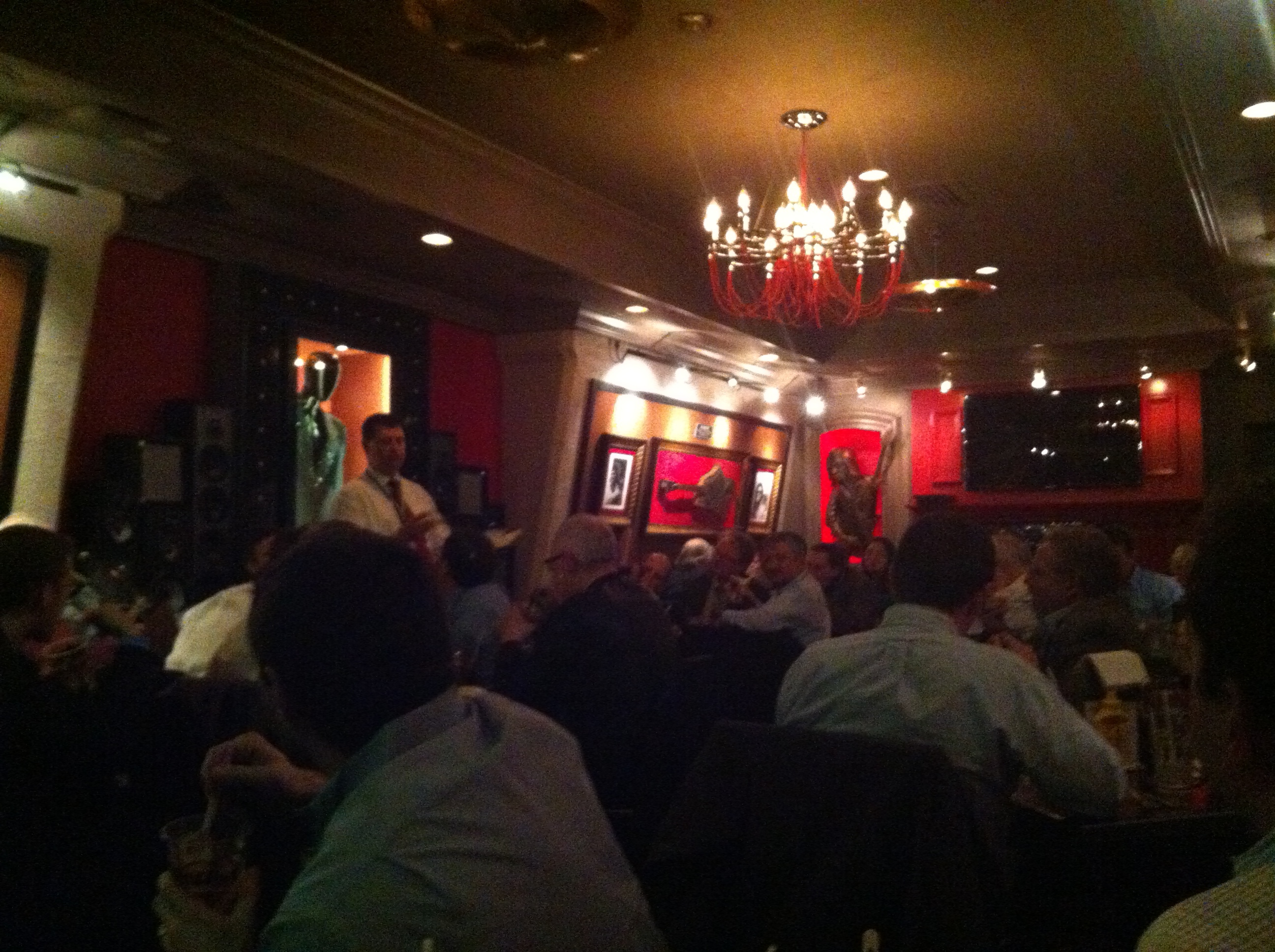
This year at the Society of Biblical Literature, the Evangelical Textual Criticism folks from Tyndale House, Cambridge University hosted a dinner at Baltimore’s Hard Rock Café. The dinner was on Sunday, Nov 24, shortly after the last session on New Testament textual criticism at SBL. It seemed strange to have a dinner for Greek geeks at a restaurant that is intentionally loud (even if the music is awesome!), since all of us would rather debate, “Is it an and or an or?” than discuss human trafficking, world peace, or the central message of the New Testament. Greek geeks—who know how to dot every ‘i’ and cross every ‘t.’ In other words, anal people.

That’s what made the printed menu so ironic. Each one of us had a little card at each place setting. Here’s a picture of the card:

menu

Notice the spelling of ‘Criticism’: the ‘ic’ is missing! A case of haplography due to parablepsis.

The evening was great. Peter Head of Tyndale House spoke about the blogs on the ETC website and the impact the ETC is making on the discipline. The ETC is the best place to go to get up-to-date news on biblical textual criticism.

ETC group

Peter Head speaking at ETC Dinner, Hard Rock Café, Baltimore

A good number of evangelical textual critics were there, along with students, interested parties, and other textual critics. I didn’t do a head count but it seemed like over fifty people were present. There were stimulating conversations taking place at every table (“Is it an and or an or?” and even a few more significant than that). Jerry Pattengale of the Green Scholars Initiative announced at the beginning of the evening that the Greens had offered to buy everyone’s dinner. Thank you, Greens, for your generosity!

I look forward to next year’s dinner and the update on the discipline that the boys at Tyndale House have a bead on.