
TIME-SENSITIVE: Put Stocks in Someone’s Stocking!

The year 2024 is almost in the books. It has been a wild roller coaster ride of a year. Ironically, instability seems to be the only thing that is consistent this year. The silver lining in the nimbostratus clouds of 2024 is that the U.S. stock market has done quite well overall. And that brings me to a special invitation.

As we enter the traditional season of giving, families also use this time to evaluate their tax situation. Granted, the continually shifting tax code doesn’t make that an easy exercise. But one constant of good news is that donating securities that have been held for a year or more offers the potential for a double tax benefit—a full fair market value tax deduction and elimination of capital gains taxes.

Many non-profits now allow direct stock donations (i.e., not having to sell the stock first). If the Lord has blessed you financially, you might want to consider giving some shares to one or more charitable organizations that you support. Many such organizations are in need of large financial infusions: although the stock market has done well, the economy is still doing poorly for too many of us. Giving a gift of shares is a very tangible way to show what really matters to you without adding to your living expenses.

The Center for the Study of New Testament Manuscripts now has a “stock option” for donations. You may donate stocks and bonds directly to CSNTM without having to sell them first. Stock gifts to CSNTM are handled by Overflow, the leading giving platform for the digital age. This can be a great way to invest in our shared mission to preserve the New Testament text and take advantage of the benefits for charitable giving in the U.S. Tax Code. (Alternatively, you can use these instructions to complete the transaction with your brokerage on your own.)

I wanted to put my stock where my mouth is, so I clicked on the CSNTM “donate stocks” page https://www.csntm.org/partnership/donate-stocks and donated some stock.
Giving securities to CSNTM was a snap. It took less than 10 minutes (and I’m old and slow!) to make the donation. Overflow makes it easy.

There is some urgency for such donations, both for CSNTM and other charities. Stock donations through Overflow must be made by December 10 to guarantee posting for 2024. That’s for the guarantee; Overflow recommends giving by December 13 to almost ensure (not quite a guarantee) that the gift will be credited for 2024. 

But there’s something else to consider for the long term: a donor-advised fund. Some donors like to set up their own private family foundation as a means of distributing gifts to favorite charities. But establishing a donor-advised fund with a firm like Fidelity Charitable can provide the ability to claim a higher tax deduction of 30% of your adjusted gross income compared to the 20% limit with a private foundation.

And the news gets better when you want to donate securities. By opening a giving account and contributing the shares to your donor-advised fund, you eliminate capital gains tax exposure and secure a charitable deduction based on the shares’ fair market value. Best of all, you can decide where to donate at a later date and, when the time comes, recommend a larger grant from your donor-advised fund than if you sell the shares and donate the net proceeds!

Our partner, Overflow, streamlines this process as well. You can donate from your donor-advised fund simply and securely here.

This is timely news for me and my family. I will be contributing more to my stock donations today, because I want to give CSNTM a generous Christmas present so that the Center can carry on the work that faithful scribes began 2000 years ago.
Help Train the Next Generation of Christian Scholars

The Center for the Study of New Testament Manuscripts (csntm.org) has been involved for the past twenty years in a hugely successful internship program. The highlight for the new batch of interns each year is participation in the fall academic conferences. They sit at the feet of some of the best biblical scholars on the planet and get to see firsthand what an academic paper/presentation looks like, including the Q&A that follows. 

The impression made on these students lasts a lifetime, and it very often changes the trajectory that they are on in their service to the body of Christ. The long-range objective is to raise up the next generation of biblical scholars to be leaders with a profound respect and deep appreciation for the New Testament. In this way, CSNTM is training the next generation of biblical scholars. 

But none of this would be possible without serious financial backing. There is an opportunity right now to double the impact of any donations you give from now until September 19North Texas Giving Day is on Thursday, September 19, and from now till then, you have the opportunity to support CSNTM’s interns—bright students who have demonstrated excellence in academic work and hold great promise for a future in biblical scholarship and church leadership.

Over the four decades of my teaching career, I have had the privilege of mentoring nearly two hundred interns—starting with Dallas Seminary students and continuing on, for the past twenty years, with CSNTM interns. These incredible scholars-in-the-making have gone on to earn PhDs from prestigious schools such as Cambridge, Oxford, Edinburgh, St Andrews, Aberdeen, Baylor, Notre Dame, Sheffield, Birmingham, Yale, Exeter, and the Catholic University of America—to name but a few. These alumni now teach in seminaries and universities, write world-class works on the Bible and theology, and help to keep New Testament scholarship on sound footing. They are today’s scholars, professors, translators, missionaries, and pastors, collectively helping others see the truth and beauty of Scripture and keeping Christian faith tethered to the biblical text.

Not only do these interns receive individual instruction from me and our research team, but they also engage in a rigorous and enriching program that is intentionally designed to equip them with the skills to seek truth and approach biblical scholarship with integrity, excellence, and faith. 

Meet Tomorrow’s Bible Scholars—Interns You Can Support Today: https://www.northtexasgivingday.org/story/Csntminterns

When you help us reach our $20,000 goal this North Texas Giving Day by allowing your combined donations of $10,000 to be matched, you enable this year’s interns to attend two prestigious academic conferences—the annual meetings of the Evangelical Theological Society and the Society of Biblical Literature. These conferences provide invaluable experiences for emerging scholars. In fact, last year, one of our interns secured a publishing deal for his book while attending the ETS conference with CSNTM!

Be sure to give between now and September 19 to have your gift DOUBLED!

With gratitude,

Dan Wallace

Why Should I Get a ThM?

The world has changed at a dizzying (and, concomitantly, nauseating, pace) in 2020, but one thing remains constant. Hebrews 13.8 declares, “Jesus Christ is the same—yesterday, today, and forever!” Yet, the Jesus Christ who is proclaimed in pulpits across the nation and spanning the globe is often conformed to the fashionable ideology of the day. He is not the same as he was yesterday. 

The Church needs rock solid pastors and leaders who know the Lord and know the text. People who preach the same Jesus Christ the apostles proclaimed. We need leaders who have been trained well in Scripture. 

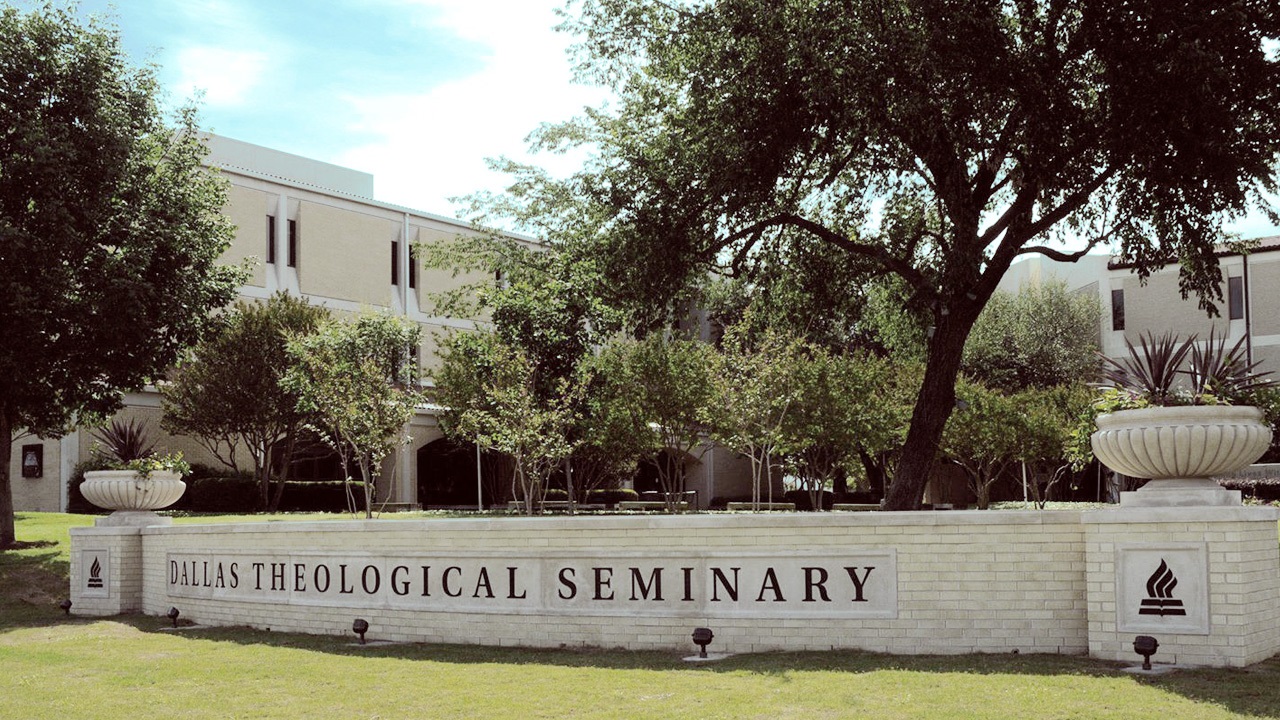
I am in my fourth decade of teaching at Dallas Seminary. I have served under five of the six presidents this institute has had. One thing I have deeply loved about the school is its commitment to the word of God. It’s the only theological seminary I know of that, instead of offering a three-year Master of Divinity degree, offers a four-year Master of Theology degree. This has been the same from the beginning, 96 years ago. 

The fourth year gives the student 33% more time than an MDiv to reflect, meditate, dialog, fellowship, and dig in. Things gel in that fourth year. And the high-level of biblically-based, earnest fellowship/discussions—from both the minutiae of the text to macro-current events that are reshaping our world, and everything in between—will almost never be replicated after you leave seminary. You will find that Christians—even Christian leaders—are usually just not that interested in the Bible. This sad state of affairs needs an equal and opposite reaction if evangelical Christianity is going to survive.

During the pandemic, potential students are really questioning the necessity of that fourth year, and questioning moving to Texas. It’s too expensive. It’s not necessary. I have a ministry right where I am. Dallas is too hot. It’s too great a sacrifice. My advice: Don’t shortcut your training when preparing for a lifetime of ministry. The Lord never put a premium on ignorance. His condemnation of the religious leaders of his day was both that they did not know the power of God or the Scriptures. Our students learn the biblical languages especially with a view toward faithful exegesis and exposition of the text. And yes, they pay a big price. 

The One Dollar House

I grew up in Newport Beach, California. To move to Texas with my new bride was challenging. I was leaving a ministry in SoCal—a church where I was the assistant pastor. We bought a house for $1.00 (you read that right) and lived in it for most of my years of preparation in the ThM program. 

(The house was part of the Homestead Urban Renewal program. Essentially, a lottery was set up for potential homeowners to get a foreclosed, dilapidated house in a very bad neighborhood for a buck and bring it up to city code. They had to own it for at least three years. Ours was at the very bottom of our list: house built in 1920, asbestos siding, lead paint, no AC, no heat, no shower, foundation shifting 12” from one end of the house to the other. And thousands upon thousands of roaches which we could never eradicate. We lived there for three and a half years, and we got to know poverty well—both because all our neighbors were very poor and because we shared in their economic state. We also got to see the underbelly of racism and oppression.)

In spite of our poverty, in spite of the sky-high crime rate in our neighborhood, in spite of the weather, in spite of the army of roaches, God provided for us. He saw us through our difficulties. He was faithful. The Sovereign of the universe, God himself, designed this wilderness experience for our good and his glory. These were formative years. We made the sacrifice because we believed that the ThM was the best way for me to prepare for a lifetime of ministry. And along the way, the Master Teacher put us through a curriculum of his own. I wouldn’t trade those years for a million bucks.

No Excuse

Tuition costs have gone up exponentially since the 1970s. And houses nowadays—even in Dallas—usually cost a bit more than a buck. But Dallas has one of the lowest unemployment numbers in the country. It’s been that way for decades. And DTS has made a remarkable, stunning offer to ThM students: fourth year free! The last twenty-four units will cost you nothing, nada, zilch—provided you take them the way they should be taken: on campus, in the flesh, in Dallas. The particulars are found at this link: https://www.dts.edu/admissions/tuition-aid/scholarships-discounts/last-year-free/.

Lots of things are competing for your time. But the deep-dive training that is a pastor’s and teacher’s requisite are a small price to pay in order to serve King Jesus for the rest of your days. And you just might find that the benefits and blessings that accompany you during the four years in Dallas are something that you would not trade for a million bucks.

Epilogue

The administration of Dallas Theological Seminary has neither endorsed this blog, nor was it even aware that I was writing it. These are my own reflections.

Mike Justice: Now he sees Jesus!

Mike Justice was one of my students at Dallas Seminary in the late 80s/early 90s. He passed into the Lord’s presence on March 8, 2019, at 63 years old. His memorial service was held today, March 23, at Lake Ridge Bible Church in Mesquite, TX. He died of heart failure, after two kidney transplants, multiple surgeries, procedures, and health problems for many years.

Michael Justice portrait-150x150  I’ve taught hundreds of students the rudiments of Hellenistic Greek in thirty-five years of graduate school instruction. Many have gone on for their doctorates; several are teaching at various institutes throughout the world and are truly exceptional scholars in their own right. Some of these students struggled with the elements of Greek; for others it came more naturally. For Mike, it was anything but easy. Yet, of this vast array of students, I would rank Mike among my top three.
Mike took his first four semesters of Greek from me. By the time first-year Greek was underway, Mike had already memorized the textbook—a serious tome called The Language of the New Testament by Eugene Van Ness Goetchius. He could cite not only what Goetchius said but where he said it—both page and section number. His Greek was impeccable. He would often go up to the board to help other students with their paradigms (and the students had to learn all the paradigms, including optatives, pluperfects, μι verbs, etc). Yet he had never studied Greek before. There were times in class when he would correct me, always very gently: “Professor Wallace, I believe that is on page 53, not page 55—and it’s the last paragraph on the page.” He was always right, too!

His sweet wife, Terri, has been in charge of the print shop at DTS for decades. It was good to see her and so many friends at the memorial service today (I had some difficulty finding a parking spot!). Their marriage was rock-solid, their love for the Lord inspiring. And in spite of Mike’s health issues, he never complained. In fact, he had a quick wit and a great sense of humor. Once when he got an ablation for his arrhythmia, in the recovery room he was told that the arrhythmia was now a thing of the past. He responded, “I’ve got rhythm? Who could ask for anything more!” (For you youngsters, that’s a line from the Gershwins’ hit song in 1930.)

Did I mention that Mike never complained? Well, he had reason to. Besides having a legion of health problems, Mike Justice was blind.

Adolescent diabetes was the ultimate cause; Mike’s eyesight began to degenerate during his college years and was gone by the time he got to seminary. He was the third blind student ever to get a Master of Theology degree at Dallas Seminary. (I’ve had the privilege of teaching Greek to two more blind students since then.) He made no excuses and buckled down to learn the material, memorizing it as he went along.

In second year Greek, the students had to diagram a portion of Philippians. Being without sight, Mike of course couldn’t do this. I told him it wouldn’t be fair to the other students for him to get a pass on this, but he couldn’t do this exact assignment. So, instead, I added hundreds of vocabulary words to his workload. He took on the challenge eagerly, cheerfully, and exceptionally.

Micah 6.8 was perhaps Mike’s favorite verse: “do justice, love mercy, and walk humbly with your God.” Mike was the poster child for this verse. And he wanted to make sure that everyone in his world knew that Jesus Christ died for sinners, and rose from the dead as a guarantee of God’s acceptance of all who put their trust in him. For Mike, that trust has finally become sight. Well done, good and faithful servant!


A Sad Home-Going for Three Saints

Autumn, for me, has been over many decades a time of adrenalin rushes, über-busyness, and frantic logistical outworkings. The cause of all this? The beginning of a new school year. This year was no exception, yet right out of the gate one biblical/theological giant after another departed this sphere for his eternal home. All died this month.

In different ways these three men all influenced me. Stanley Toussaint was a colleague at Dallas Seminary, a man who taught the Bible for forty-two years at DTS. He was one of the last of the luminaries of the 1970s (my time in the ThM program)—John Walvoord, Charles Ryrie, S. Lewis Johnson, Jr., Haddon Robinson, Harold Hoehner, Zane Hodges—who have all gone beyond the sufferings of the present time. Stan taught in the Bible Exposition Department (which is different from the Old Testament and New Testament Departments). He lectured from his Greek New Testament and had a down-home wit, pastoral heart, and penetrating insights into the text.

Stan was always cheerful in spite of having a severe limp from polio that struck him down when he was just a child. I never had the privilege of taking a course from Stan, however: I came in to DTS with plenty of English Bible and was permitted to pass on my English NT courses as long as I filled up the units with courses from the Biblical Studies Division; I loaded up on Hebrew. We agreed on much, but we also disagreed on some things. For example, he tenaciously held to Matthean priority, a position my own department chairman, Harold Hoehner, also embraced. I came to the position of Markan priority in 1987, a dozen years after following in Hoehner’s train.

Robert L. Thomas, professor of NT at Master’s Seminary, 1987–2008, also died just a few days ago. He was a professor at Talbot Seminary when I was a student at Biola University. I heard him speak in chapel a few times and learned that he would frequently invite my Greek professor, Harry Sturz, to his Greek classes to introduce students to Sturz’s perspective on NT textual criticism. Afterward, Thomas would refute Sturz’s position.

Bob and I had a few tangles over the years. In his school’s journal, he critiqued my Greek Grammar Beyond the Basics in the article, “The Principle of Single Meaning” (TMSJ 12/1 [2001] 33–47). He claimed that the book has some interesting points, but it also was “extremely dangerous.” Why? Because I had presumably imbibed Roman Catholic hermeneutics with my category of plenary genitive. Ironically, what Bob did not know was that I learned of that category of usage (though not by that name) by one of his revered theology professors, Charles Ryrie—a man who could hardly be accused of following Roman Catholic hermeneutics.

Bob also didn’t care much for ideas with theologically liberal roots, especially the historical-critical method—this in spite of responses by my colleague, Darrell Bock, and many other evangelical exegetes who argued that method and presupposition are not the same thing.

I suspect that Bob and I would probably have agreed more on many points of Reformed theology than I did with Stan Toussaint. Regardless of what one thinks of how Thomas dealt with other evangelicals, I confess that I admire the man for his faithfulness to scripture and to studying the original languages his whole life.

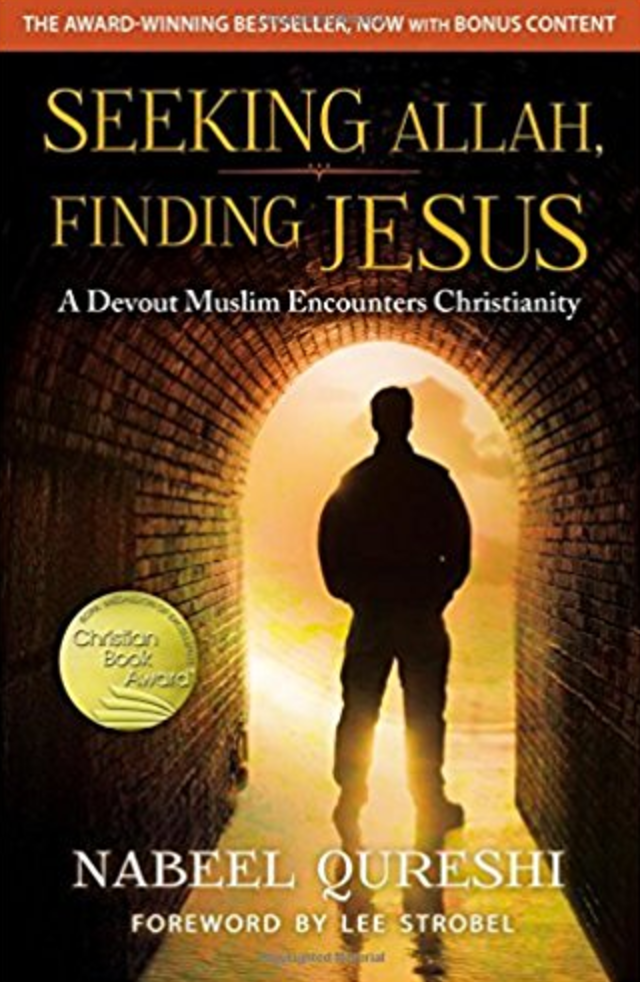
This past Thursday, September 21, I drove down to Houston with my good friend, Ed Komoszewski, to the funeral of another good friend, Nabeel Qureshi. Nabeel was diagnosed with stomach cancer in August 2016 and succumbed to the disease on Saturday, September 16. He leaves behind his wife, Michelle, and their young daughter, Ayah. Nabeel came to faith in Christ dramatically through the instrumentality of his college roommate David Wood and through visions of Christ, about a dozen years ago. He became a champion for the gospel. His first book, Seeking Allah, Finding Jesus, has been a huge success, selling hundreds of thousands of copies. Nabeel died too soon. He was only 34.
Screen Shot 2017-09-24 at 12.41.36 PM.png

Nabeel and I had our differences, too. He didn’t care much for Calvinism especially. We would have vigorous, passionate discussions about God’s sovereignty and mankind’s responsibility/free will, but these never harmed our friendship.

His interest was in the Gospels and he would be on the opposite end of the spectrum from Bob Thomas when it came to evangelical historical criticism. He was an internationally-known evangelist, especially to Muslims.

And his brain-power was legendary. He had read the entire Qur’an in Arabic (the only true Qur’an) by the age of five. Nabeel was a medical doctor who then went on to earn three master’s degrees—one from Biola, one from Duke, and one from Oxford. He was working on his Oxford DPhil when he died. When Nabeel came to Dallas, we would get together to discuss the Gospels. He was a sponge! He soaked up everything I said, then wrung it out and gently refuted many of my points! He had great respect for me—far greater than I deserved. I have known few people with such an insatiable desire to learn or with such an incredible impact for the sake of Christ.

Many believers throughout the world are grieving for each of these men right now. All three will be missed. They are saints of the Lord who now know the glory that will some day be revealed to all of God’s sons and daughters.