Athens Expedition to Digitize Biblical Manuscripts

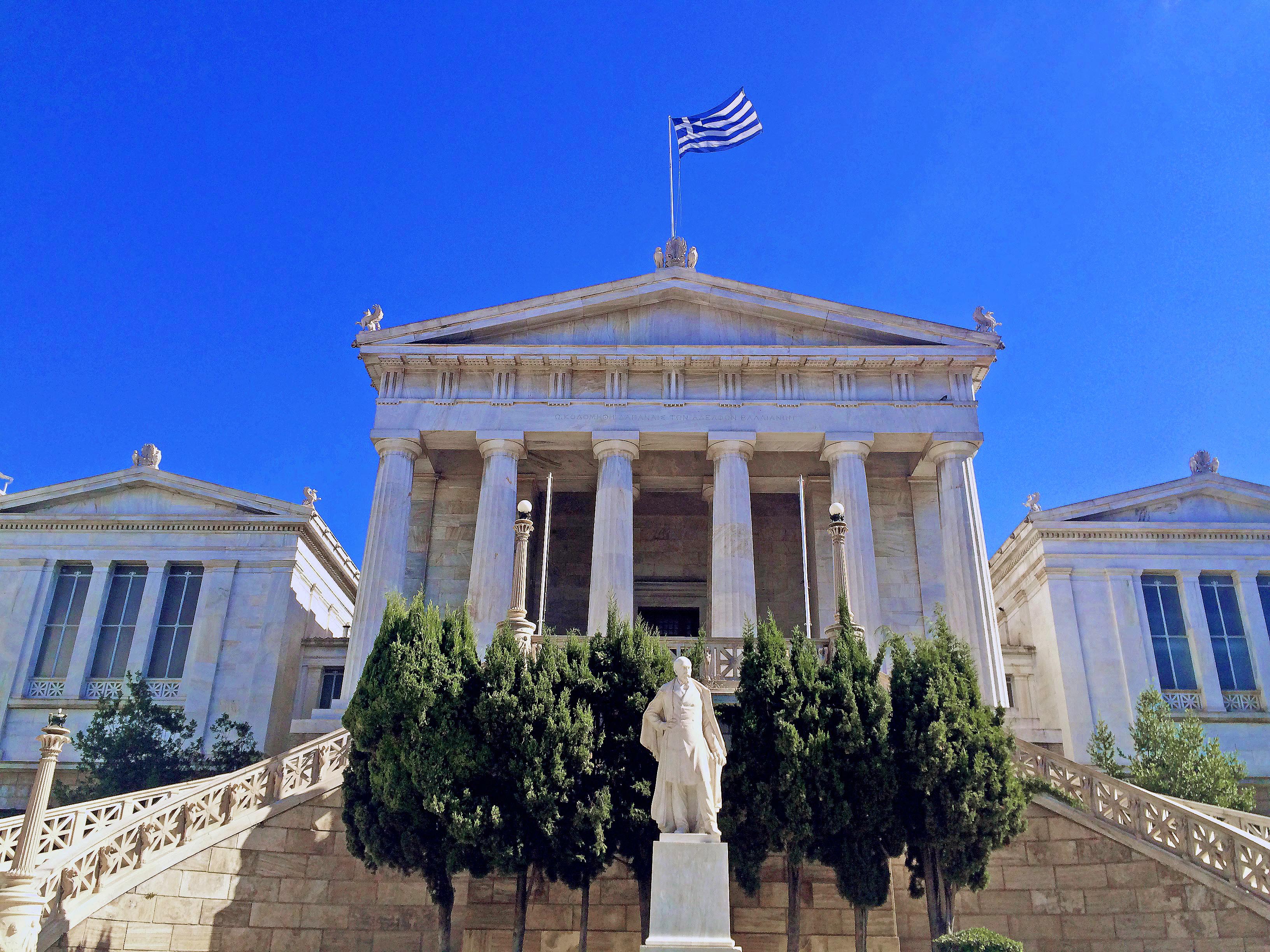
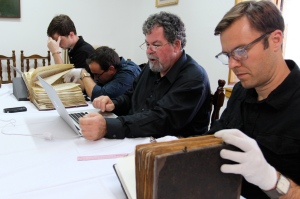
Friends, many of you know that the Center for the Study of New Testament Manuscripts has signed a contract with the National Library of Greece in Athens to digitize their entire collection of New Testament manuscripts. I have already spent more time in Athens this year than in America, preparing the manuscripts for digitization. The NLG is one of the five largest repositories in the world for Greek NT manuscripts. They have over 300 of these, coming to about 150,000 pages of text. CSNTM will shoot all of these pages over the next two years. Rob-Filippos-dbw With the troubles in the world today, especially with ISIS and other groups trying to destroy Christian artifacts, the importance of our work has never been more urgent. And this upcoming expedition will cost CSNTM about $835,000! We need your help. Below are some key items that we will need to pay for. If you believe in the importance of scripture, or even if you are simply interested in making sure that our world heritage is preserved, you need to be involved with CSNTM’s efforts. National_Lib Already in my time in Athens this year, several discoveries have been made. At least half a dozen NT manuscripts—unknown to western scholars—have been discovered. And within other manuscripts, which have been known for well over a century, a number of new and exciting discoveries have been made. CSNTM will have 7–8 people in Athens this summer for over 90 days straight. And we will continue digitizing the manuscripts in 2016. Just some of the equipment costs for this, the largest expedition CSNTM has ever undertaken, are as follows: 1. Four new computers, complete with specialized software, lengthy warranty (we are hard on computers), and fast processors: $18,000 2. Five new cameras, with 50 megapixel imaging capability (each TIFF image will be as many as 300 MB!): $21,000 3. Other equipment needs (including hard drives, onsite RAID system, Graz Travellers Conservation Copy Stand, etc.): $41,000 Total for this equipment: $80,000 On top of this there are housing costs, salaries, training costs, airfare, meals, etc. (I didn’t itemize these because I didn’t want to scare you!) CSNTM will be posting all of the images online so that anyone can see them. The images will be free for all and free for all time.IMG_1062 Another way to look at our costs is to think in terms of digitizing a manuscript. The average NT manuscript will cost CSNTM about $2500 to digitize. That’s about $5.50 per page. Some of you may be able to preserve a few pages; others will be able to preserve a whole manuscript. Every gift counts! And each person who contributes $2500 or more will receive a certificate that specifies how many manuscripts they have digitally preserved. Finally, another way everybody can help is to spread the word. Talk to your friends and family members, link to this blog on your Facebook or other social media, or link to this blog on your own blogsite.
All donations are tax-deductible. Please consider how you can help. 
Donate Button

There Were Giants in Those Days: Codex Robertsonianus (Gregory-Aland 2358), Part 1

In 1927, Adolf Deissmann began a correspondence with A. T. Robertson that led to the purchase of a Greek Gospels manuscript by Southern Baptist Theological Seminary. Some of the story of this manuscript’s travels and text is told by John W. Bowman in his 23-page booklet (with four plates), The Robertson Codex (Allahabad, India: Mission Press, 1928). The booklet was a reprinting of articles in The Indian Standard 139, nos. 8 and 9 (August and September, 1928). Bowman had been a student of Robertson’s at Southern and later became professor of New Testament and Church History at North India United Theological College in Saharanpur, India.

In Bowman’s booklet are two chapters, which correspond to the two articles in The Indian Standard. The first chapter addresses the process of photographing the manuscript, and is a window on the difficulties that attended such labors in the 1920s. It took the author nearly three months to photograph it! Today, with digital photography, the Center for the Study of New Testament Manuscripts normally photographs a 350-page manuscript (the size of Codex Robertsonianus) in less than a day. In this chapter he mentions the rarity of photographs of New Testament manuscripts: “Very few complete MSS of the N.T. or portions thereof have hitherto been photographed: I am personally aware of only five such” (5). Bowman’s second chapter discusses many fascinating details of the manuscript.

One thing is largely missing, however, from the book: except for small snippets here and there, the correspondence between Deissmann and Robertson is not mentioned. This blog thus supplements Bowman’s pamphlet with Deissmann’s letters to Robertson concerning the codex (I do not have access to Robertson’s responses to Deissmann).

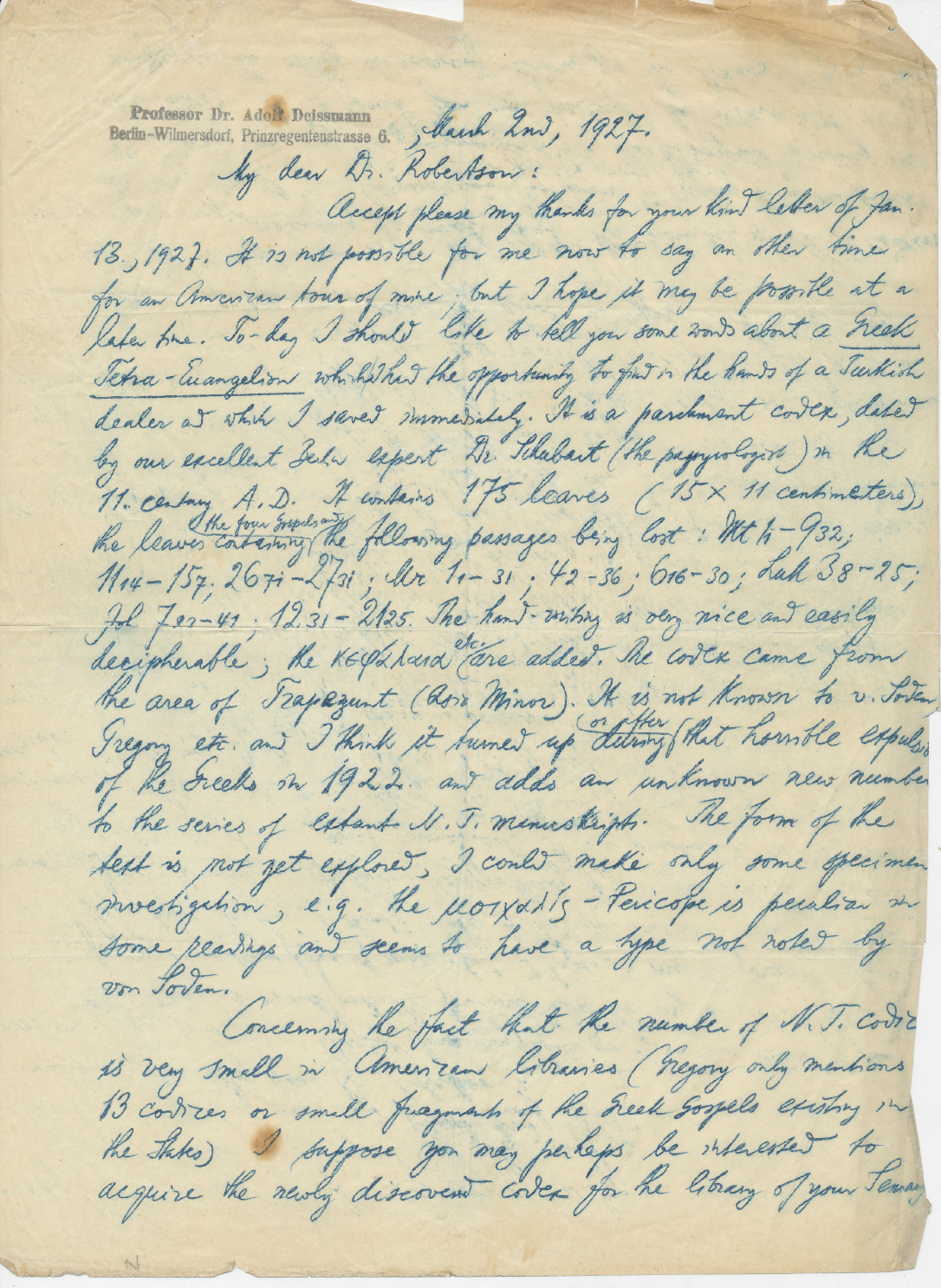
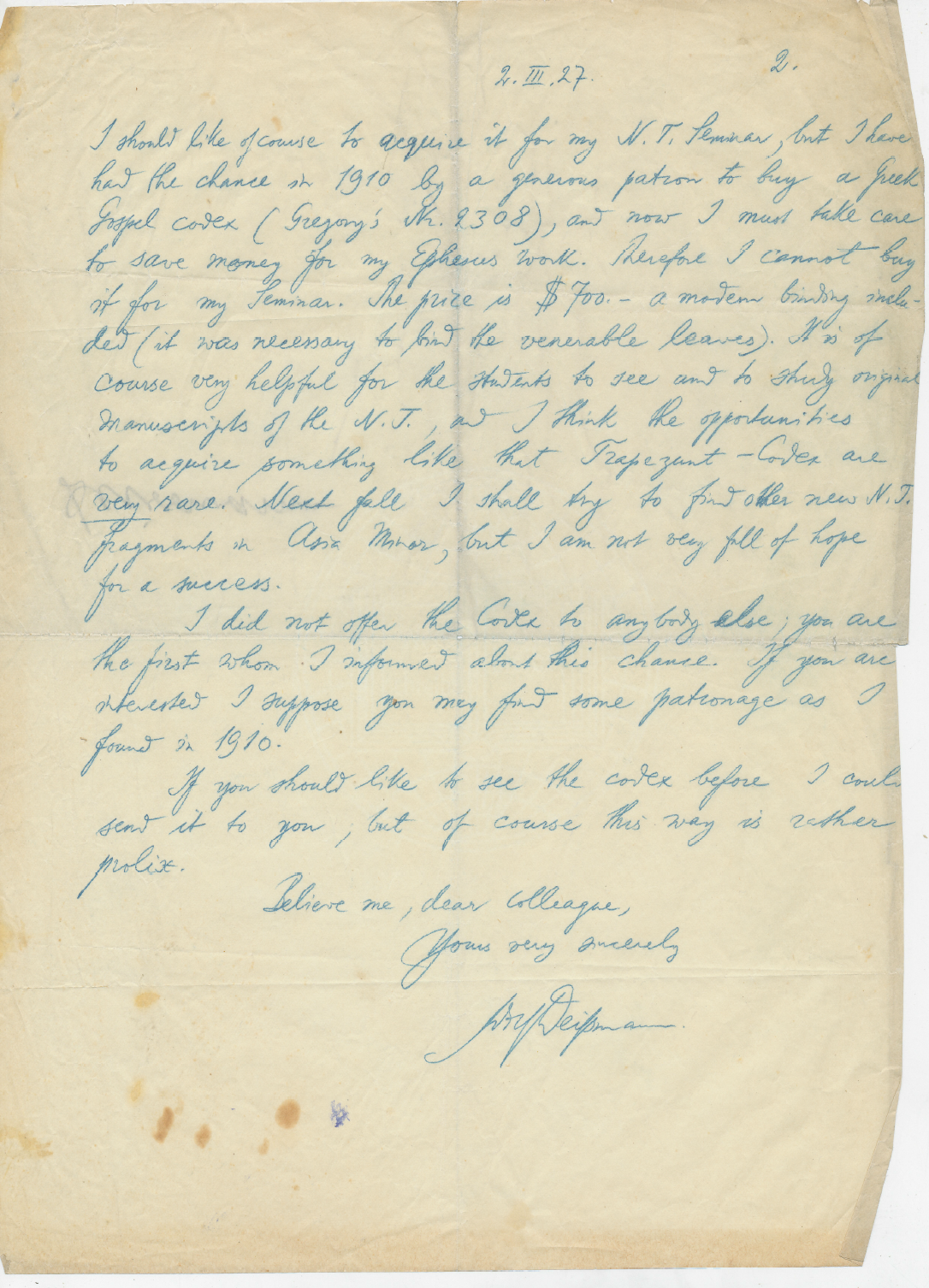
Below are photographs of the first letter (along with the text printed beneath each one), which was obtained from Southern Baptist Seminary. In later blogs, I will post the rest of the letters and text. These letters constitute the A. T. Robertson Papers, Box 7, Folder 3, Archives and Special Collections, James P. Boyce Centennial Library, The Southern Baptist Theological Seminary, Louisville, Kentucky. I am grateful to Adam Winters, archivist at SBTS, who provided the photographs. They are used with permission of the SBTS Archives & Special Collections.

Deissmann to Robertson_2 Mar 1927_page 1 of 2

Professor Dr. Adolf Deissmann
Berlin-Wilmersdorf, Prinzregentenstrasse 6., March 2nd, 1927.

My dear Dr. Robertson:

Accept please my thanks for your kind letter of Jan. 13, 1927. It is not possible for me now to say an other time for an American tour of mine; but I hope it may be possible at a later date. To-day I should like to tell you some words about a Greek Tetra-Euangelion which I had the opportunity to find in the hands of a Turkish dealer and which I saved immediately. It is a parchment codex, dated by our excellent Berlin expert Dr. Schubart (the papyrologist) in the 11. century A.D. It contains 175 leaves (15 x 11 centimeters), the leaves containing the four Gospels and the following passages being lost: Mt 11–932; 1114–157; 2671–2731; Mr 11–31; 42–36; 616–30; Luk 38–25; Joh 723–41; 1231–2125. The hand-writing is very nice and easily decipherable; the κεφάλαια etc. are added. The codex came from the area of Trapezunt (Asia Minor). It is not known to v. Soden, Gregory etc. and I think it turned up during or after that horrible expulsio[n] of the Greeks in 1922. and adds an unknown new number to the series of extant N.T. manuscripts. The form of the text is not yet explored, I could make only some specimen investigation, e.g. the μοιχαλίς-Pericope is peculiar in some readings and seems to have a type not noted by von Soden.

Concerning the fact that the number of N.T. codic[es] is very small in American libraries (Gregory only mentions 13 codices or small fragments of the Greek Gospels existing in the States) I suppose you may perhaps be interested to acquire the newly discovered codex for the library of your Seminary[.]

Deissmann to Robertson_2 Mar 1927_page 2

I should like of course to acquire it for my N.T. Seminar, but I have had the chance in 1910 by a generous patron to buy a Greek Gospel codex (Gregory’s Nr. 2308), and now I must take care to save money for my Ephesus work. Therefore I cannot buy it for my Seminar. The price is $700.—a modern binding included (it was necessary to bind the venerable leaves). It is of course very helpful for the students to see and to study original manuscripts of the N.T., and I think the opportunities to acquire something like that Trapezunt-Codex are very rare. Next fall I shall try to find other new N.T. fragments in Asia Minor, but I am not very full of hope for a success.

I did not offer the Codex to anybody else; you are the first whom I informed about this chance. If you are interested I suppose you may find some patronage as I found in 1910.

If you should like to see the codex before I could send it to you, but of course this way is rather prolix.

Believe me, dear colleague,

Yours very sincerely

Adolf Deissmann.

Press Release from CSNTM

Press Release (8 Nov 2013):

Debut of Chester Beatty Papyri and New User Tools at CSNTM

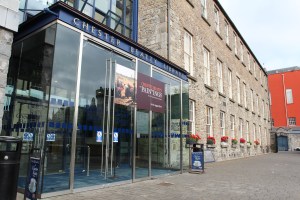
IMG_5770

The Center for the Study of New Testament Manuscripts (www.csntm.org) is well known for digitizing ancient biblical manuscripts. But the Center is not well known for having a user-friendly website. Because of a generous donation, the Center is giving a much-needed face-lift to its site. Phase I includes the following new features:

  • A basic search function now allows users to look at manuscripts by date, material, content, etc. You will notice a new search bar at the top of the manuscripts page. Simply enter in the data you’re looking for, and only those manuscripts that meet the criteria will be displayed.
  • Viewing technology has been added, allowing users to see thumbnail images instead of just a link. Simply click on the thumbnail and the high-resolution image is displayed in the viewer below. Users can now zoom in and examine manuscripts without having to open individual pages. This feature is currently available only for manuscripts digitized on the last five expeditions (Biblioteca Medicea Laurenziana in Florence; Gennadius Library in Athens; University of Athens Historical Museum; City Historical Library of Zagora, Greece; and the Chester Beatty Library in Dublin). More to come!
  • The website also provides links to the images of 29 (and growing!) significant manuscripts in various libraries throughout the world.
  • CSNTM currently has over 450 manuscripts listed in its manuscript page, with more than 1100 manuscripts in our archives. We are working on getting all 1100+ manuscripts listed on the site. As always, when the Center gets permission, the images of manuscripts become accessible to all.

The most exciting new additions to the CSNTM website are the Chester Beatty biblical manuscripts (which we digitized in the summer of 2013). These include all Old and New Testament Greek papyri, apocryphal texts, and all Greek New Testament manuscripts housed at the CBL in Dublin. Best of all, these can now be viewed on the manuscripts page. Using state-of-the-art digital equipment, the Center photographed each manuscript against white and black backgrounds. The result was stunning. The photographs reveal some text that has not been seen before.

CSNTM is grateful to the CBL for the privilege of digitizing these priceless treasures. The staff were extremely competent and a joy to work with. We are grateful to Dr. Fionnuala Croke, Director of CBL, for the opportunity to digitize their biblical texts. And we wish to thank Dr. Larry Hurtado, Edinburgh University, and the late Dr. Sean Freyne, Trinity College, Dublin, for recommending CSNTM for this important undertaking.

Daniel B. Wallace, Executive Director of CSNTM

Robert D. Marcello, Research Manager of CSNTM